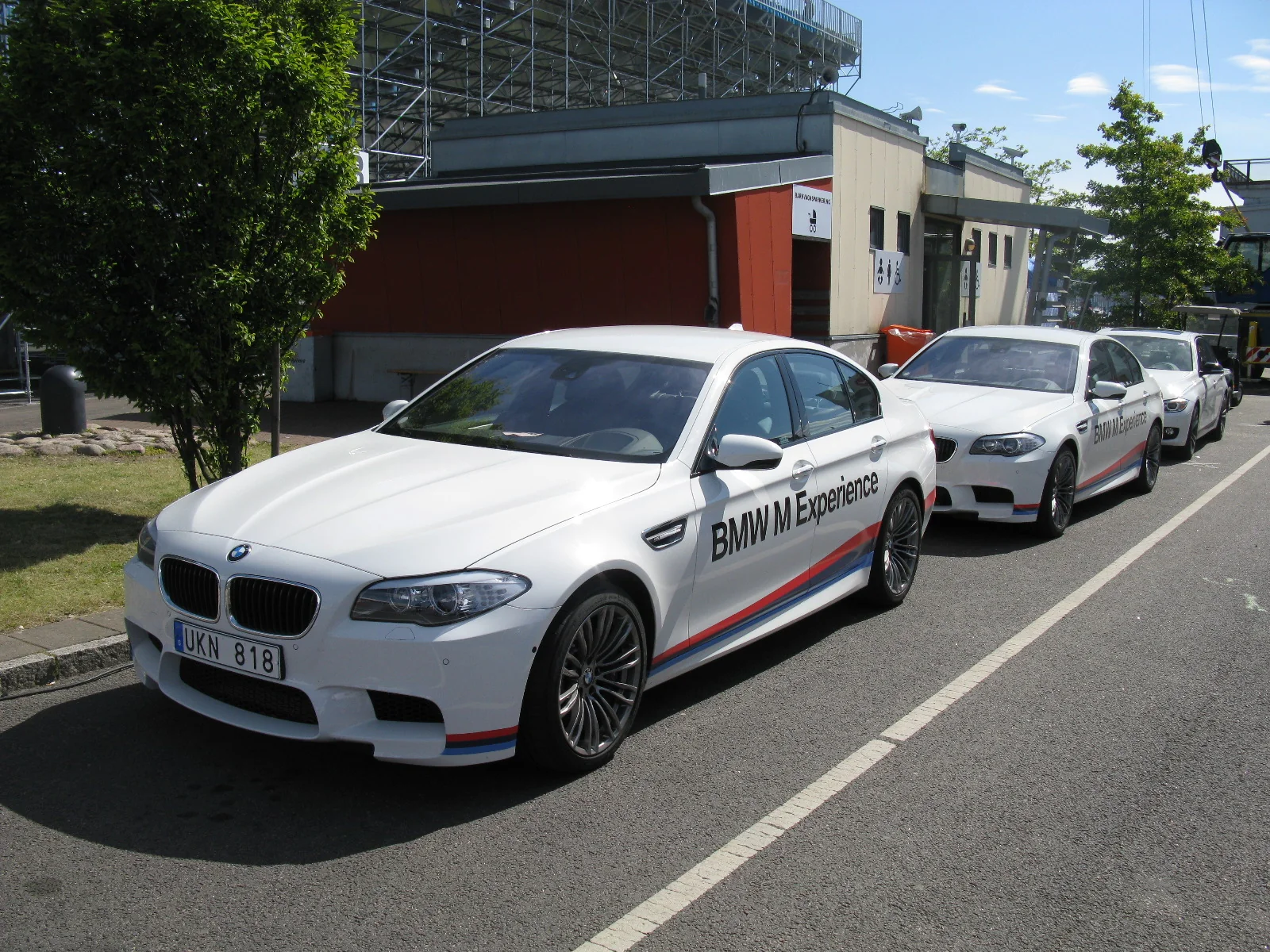
BMW F10 M5
UK MOT + US NHTSA · Reviewed · MethodologyUK roadworthiness data and US recall records · Great Britain MOT 2023; US NHTSA full-file snapshot 2026-10-29; UK DfT stock 2025 · Reviewed by Responsable del proyecto (usuario de esta conversación; nombre personal no facilitado) on 2026-10-29 · Sources and methodology
At a glance
- First-presentation pass rate
- 87.9%n = 2,108 initial tests
- Initial tests
- 2,108UK MOT 2023
- Engine
- 4.4L twin-turbo V8Technical source in the engine section
- Years
- US launch: MY2013Production and US model years can differ
- DVSA anonymised MOT tests and results · Retrieved 2026-10-29T05:26:14Z · Open Government Licence v3.0 · BMW M5; cc=4395-4395; first_use_year=2011-2016; provisional cohort, not VIN verified; ambiguous F10/F90 2017 excluded
The F10 changes the M5 formula from the E60's naturally aspirated V10 to a twin-turbo V8. US launch material also distinguishes the seven-speed M DCT and available six-speed manual. This guide keeps that specification history separate from present condition, explains the narrow early oil-pump campaign and makes the gaps in broader reliability evidence explicit. It contains no first-hand driving or mechanical verdict. Initial human editorial review is complete;
Is the F10 M5 reliable?
No data: the checked primary sources do not provide a complete F10 major-repair rate or a matched comparison with the E39 and E60. A recall can identify a serious, narrowly defined condition while leaving most ownership questions unanswered.
A useful assessment needs the actual build, fitted equipment, repair history and current inspection findings. Ask the inspector to distinguish the original specification from later changes, and to explain how claimed major work was verified. Our provisional editorial conclusion is that the turbocharged layout and transmission options are reasons to compare this generation; they cannot establish the remaining life of a specific engine or gearbox.
- BMW USA: 2012 Amelia Island preview, US 2013 M5 · Retrieved 2026-10-28 · BMW copyrighted press material; brief factual synthesis only. · Historical launch information, no present-day prices or service costs.
- NHTSA: Resources Related to Investigations and Recalls · Retrieved 2026-10-28 · NHTSA US government webpage; factual paraphrase. · Complaints do not provide a fleet exposure denominator or a measured failure probability.
Oil-pump campaign and other repair questions
The oil-pump item has an official fault description. The remaining categories are open research and inspection questions, with no frequency ranking attached.
Early 2013-model oil-pump recall
Campaign 12V-475 covers certain 2013 M5 and M6 vehicles built from July 19 through September 11, 2012. NHTSA's acknowledgement describes a pump driveshaft that could separate from its rotor, causing loss of oil pressure and possible engine failure. The stated remedy was replacement of the oil pump.
This specific manufacturing issue must not become a claim that all F10 M5s share the same defect. For a potentially relevant car, verify campaign applicability and completion with BMW. Current warning messages or engine symptoms require their own assessment regardless of a historical campaign record.
- NHTSA acknowledgement: Recall 12V-475, engine oil-pump failure · Retrieved 2026-10-28 · NHTSA federal acknowledgement; US government material, factual paraphrase. · Includes M6; not a whole-generation defect rate. VIN completion not established.
Turbocharging and cooling claims
No data: this guide has no accepted primary document establishing a whole-generation turbocharger or cooling-system failure rate. The presence of turbochargers is a design fact, not a diagnosis. Ask an inspector to document actual condition, warnings and the basis of any recommended further work.
- BMW USA: 2012 Amelia Island preview, US 2013 M5 · Retrieved 2026-10-28 · BMW copyrighted press material; brief factual synthesis only. · Historical launch information, no present-day prices or service costs.
Manual and M DCT condition
The US launch reference includes a traditional six-speed manual alongside M DCT. No data: a fair failure-rate comparison between them has not been established here. Identify the actual fitted transmission, seek relevant invoices and have any current operating concern diagnosed rather than inferred from the control layout.
- BMW USA: 2012 Amelia Island preview, US 2013 M5 · Retrieved 2026-10-28 · BMW copyrighted press material; brief factual synthesis only. · Historical launch information, no present-day prices or service costs.
Modified examples
No data: no validated study in this research pass quantifies the repair risk of particular modifications. If a car has changed hardware or software, document what changed, who carried out the work and what supporting records exist. A claimed power output or an aftermarket part does not certify a reliability improvement.
- BMW USA: 2012 Amelia Island preview, US 2013 M5 · Retrieved 2026-10-28 · BMW copyrighted press material; brief factual synthesis only. · Historical launch information, no present-day prices or service costs.
- NHTSA acknowledgement: Recall 12V-475, engine oil-pump failure · Retrieved 2026-10-28 · NHTSA federal acknowledgement; US government material, factual paraphrase. · Includes M6; not a whole-generation defect rate. VIN completion not established.
What to check before buying
Use the inspection to resolve specific questions, not to reproduce a generic list of reputation-based faults. First establish the car's specification and history, then ask which current findings need attention or further investigation.
- Match the VIN, build date, transmission and claimed edition to the documentation.
- For a car near the early campaign window, obtain exact oil-pump campaign status and completion evidence.
- Request itemized records for major engine, turbocharging, cooling and transmission work claimed.
- Record hardware and software changes separately from the original factory specification.
- Have the inspector explain warning messages, diagnostic results, leaks, body condition and the limits of the assessment.
- NHTSA acknowledgement: Recall 12V-475, engine oil-pump failure · Retrieved 2026-10-28 · NHTSA federal acknowledgement; US government material, factual paraphrase. · Includes M6; not a whole-generation defect rate. VIN completion not established.
- BMW USA: 2012 Amelia Island preview, US 2013 M5 · Retrieved 2026-10-28 · BMW copyrighted press material; brief factual synthesis only. · Historical launch information, no present-day prices or service costs.
US launch and Competition Package context
The contemporary US preview places the 2013 M5 in showrooms in summer 2012. This is why a global F10 introduction date and the US first model year are kept distinct. BMW's later US history describes the Competition Package with a 575-hp rating and identifies further special editions.
No data: this guide does not provide a complete annual US option matrix. Confirm the factory build and edition for the individual car; later cosmetic changes or an advertised badge are insufficient evidence.
- BMW USA: 2012 Amelia Island preview, US 2013 M5 · Retrieved 2026-10-28 · BMW copyrighted press material; brief factual synthesis only. · Historical launch information, no present-day prices or service costs.
- BMW USA: 2018 M5 launch, retrospective F10 editions · Retrieved 2026-10-28 · BMW copyrighted press material; factual paraphrase only, no media copied. · No edition production counts used; launch dates may differ by market.
The twin-turbo V8 and US launch rating
The US launch reference specifies a 4.4-liter twin-turbo V8 rated at 560 hp and 500 lb-ft. This baseline should not be substituted for Competition or special-edition ratings, and it says nothing about the actual output of a modified example.
Its architecture is the useful contrast with the preceding V10. Choosing which concept interests you is a preference decision. Declaring one cheaper to maintain or more durable would require evidence this guide does not possess.
- BMW USA: 2012 Amelia Island preview, US 2013 M5 · Retrieved 2026-10-28 · BMW copyrighted press material; brief factual synthesis only. · Historical launch information, no present-day prices or service costs.
- BMW USA: The 2020 BMW M5 Edition 35 Years, historical generations · Retrieved 2026-10-28 · BMW copyrighted press material; limited factual synthesis only. · Its retrospective date headings are not treated as a complete US model-year table; local dates are checked against contemporary launch sources.
US campaign records and the individual vehicle
The historical panel identifies campaigns returned for the displayed model-year scope. Confirm the VIN and any completed remedy with the manufacturer. A count of campaigns is neither a defect-rate score nor a count of repairs this car still needs.
| Complaint coverage | Recall coverage | Queried model years | Owner reports | Unique campaigns | Vehicle denominator |
|---|---|---|---|---|---|
| Complete for requested model-year scope | Complete for requested model-year scope | 2013;2014;2015;2016 | 16 | 5 | No data |
No data means the stated scope is unavailable, incomplete or has no vehicle denominator; it never means zero. Report totals and details are shown only for complete requested coverage for the respective dataset. Counts are not vehicle-level failure probabilities.
- NHTSA official datasets and APIs · Retrieved 2026-10-29 · US federal government public data; NHTSA
| Campaign | Queried model years | Report date | Component | Summary |
|---|---|---|---|---|
| 12V475000 | 2013 | 20120928 | ENGINE AND ENGINE COOLING:ENGINE | BMW is recalling certain model year 2013 M5, M6 Coupe, and M6 Convertible vehicles, manufactured from July 19, 2012, through September 11, 2012. Due to a manufacturing process error, the tolerance between the engine oil pump's drive shaft and the pump's rotor was not within specification. As a result, the pump's driveshaft could separate from the rotor. |
| 15V188000 | 2013;2014 | 20150331 | EXTERIOR LIGHTING | BMW of North America, LLC (BMW) is recalling certain model year 2013 528i, 528i xDrive, 535i, 535i xDrive, 550i, 550i xDrive, and ActiveHybrid 5 vehicles. The rear reflex reflectors may not reflect enough light. As such, the vehicles fail to comply with the requirements of Federal Motor Vehicle Safety Standard number 108, "Lamps, Reflective Devices, and Associated Equipment." |
| 15V718000 | 2016 | 20151030 | CHILD SEAT | SEATS:MID/REAR ASSEMBLY | BMW of North America, LLC (BMW) is recalling certain model year 2016 528i, 528i xDrive, 535i, 535i xDrive, 535d xDrive, M5, 550i, 550i xDrive, and 535d sedans. The affected vehicles have an inboard lower anchor for child restraints on the left rear seat that may have been bent downwards, preventing the child seat from fully engaging both lower anchors. As such, these vehicles may fail to comply with the requirements of Federal Motor Vehicle Safety Standard (FMVSS) number 225, "Child Restraint Anchorage Systems." |
| 16V540000 | 2015 | 20160719 | POWER TRAIN:DRIVELINE:DRIVESHAFT | BMW of North America, LLC (BMW) is recalling certain model year 2015 BMW M5 sedans manufactured September 4, 2014, through December 4, 2014, 2015 M6 coupes manufactured September 3, 2014, through December 3, 2014, 2015 M6 convertibles manufactured September 8, 2014, through December 4, 2014, and 2015 M6 Gran Coupe vehicles manufactured September3, 2014, through December 4, 2014. The affected vehicles have a driveshaft that may have been inadequately welded during manufacturing. |
| 16V914000 | 2016 | 20161220 | AIR BAGS | BMW of North America, LLC (BMW) is recalling certain model year 2017 BMW 640i, 640i xDrive, 650i, 650i xDrive, M6, 535i, 535i xDrive, 430i, 430i xDrive, 440i, 440i xDrive, M4, X1 sDrive28i, X1 xDrive28i, i3, i8, Rolls-Royce Dawn, Mini Clubman Cooper, Clubman Cooper S, Cooper All4, Cooper S All4, Mini 4-Door Cooper, Cooper S, Mini 2-Door Cooper, Cooper S, John Cooper Works and 2016 BMW 528i, 528i xDrive, 535i, 535i xDrive, 550i, 550i xDrive, M5 and 535d vehicles. The affected vehicles have seat- mounted side air bag inflator initiators that may fail to ignite during a crash. |
Campaign records may overlap model years and other BMW models. A listed campaign does not establish whether a particular VIN remains unrepaired.
- NHTSA recalls; check an individual vehicle by VIN · Retrieved 2026-10-29 · US federal government public data; NHTSA
| Component | Reports mentioning component | Reports in query | Queried model years |
|---|---|---|---|
| ENGINE | 9 | 16 | 2013;2014;2015;2016 |
| STEERING | 3 | 16 | 2013;2014;2015;2016 |
| ELECTRICAL SYSTEM | 2 | 16 | 2013;2014;2015;2016 |
| FUEL/PROPULSION SYSTEM | 2 | 16 | 2013;2014;2015;2016 |
| SERVICE BRAKES | 2 | 16 | 2013;2014;2015;2016 |
| AIR BAGS | 1 | 16 | 2013;2014;2015;2016 |
| ELECTRONIC STABILITY CONTROL (ESC) | 1 | 16 | 2013;2014;2015;2016 |
| POWER TRAIN | 1 | 16 | 2013;2014;2015;2016 |
| SEAT BELTS | 1 | 16 | 2013;2014;2015;2016 |
| SUSPENSION | 1 | 16 | 2013;2014;2015;2016 |
| UNKNOWN OR OTHER | 1 | 16 | 2013;2014;2015;2016 |
| VEHICLE SPEED CONTROL | 1 | 16 | 2013;2014;2015;2016 |
Owner reports are allegations and may mention several components. No fleet denominator is available: these counts are not failure rates or proof of a defect.
- NHTSA complaints dataset · Retrieved 2026-10-29 · US federal government public data; NHTSA
- NHTSA: Check for Recalls · Retrieved 2026-10-28 · NHTSA US government webpage; factual paraphrase. · Dynamic service; no live VIN query was performed.
- NHTSA VIN recall lookup
British inspection context
Use the Great Britain test results only within their displayed period, matching rules and result definitions. They do not measure US turbo-V8 longevity. Do not merge first-pass results with rectification outcomes, and do not assign an odometer unit until it is verified.
| Test year | Initial tests | P: first pass | F: failed | PRS: rectified | First-presentation pass (%) | Final pass (%) |
|---|---|---|---|---|---|---|
| 2023 | 2,108 | 1852 | 219 | 37 | 87.9% | 89.6 |
P passed at first presentation; F failed; PRS failed initially and passed after rectification. First-presentation pass rate = P / (P + F + PRS); final pass rate = (P + PRS) / (P + F + PRS). UK roadworthiness tests cover safety and emissions; they do not measure engine life, gearbox health, service history or US failure probability. Contains public sector information licensed under the Open Government Licence v3.0.
- DVSA anonymised MOT tests and results · Retrieved 2026-10-29T05:26:14Z · Open Government Licence v3.0 · BMW M5; cc=4395-4395; first_use_year=2011-2016; provisional cohort, not VIN verified; ambiguous F10/F90 2017 excluded
- Open Government Licence v3.0
| Record kind | MOT area code | Annotations | Distinct tests | Tests per 100 initial tests |
|---|---|---|---|---|
| advisory | Body, chassis, structure | 7 | 7 | 0.3 |
| advisory | Brakes | 454 | 247 | 11.7 |
| advisory | Identification of the vehicle | 9 | 9 | 0.4 |
| advisory | Lamps, reflectors and electrical equipment | 2 | 2 | 0.1 |
| advisory | Noise, emissions and leaks | 31 | 29 | 1.4 |
| advisory | Non-component advisories | 97 | 85 | 4.0 |
| advisory | Road Wheels | 5 | 5 | 0.2 |
| advisory | Seat belts and supplementary restraint systems | 4 | 4 | 0.2 |
| advisory | Steering | 1 | 1 | 0.0 |
| advisory | Suspension | 54 | 37 | 1.8 |
| advisory | Tyres | 558 | 307 | 14.6 |
| defect | Brakes | 21 | 12 | 0.6 |
| defect | Identification of the vehicle | 11 | 7 | 0.3 |
| defect | Lamps, reflectors and electrical equipment | 30 | 24 | 1.1 |
| defect | Noise, emissions and leaks | 67 | 40 | 1.9 |
| defect | Road Wheels | 6 | 5 | 0.2 |
| defect | Seat belts and supplementary restraint systems | 3 | 3 | 0.1 |
| defect | Steering | 2 | 2 | 0.1 |
| defect | Suspension | 66 | 55 | 2.6 |
| defect | Tyres | 127 | 87 | 4.1 |
| defect | Visibility | 39 | 36 | 1.7 |
| minor | Lamps, reflectors and electrical equipment | 5 | 5 | 0.2 |
| minor | Suspension | 6 | 5 | 0.2 |
| minor | Tyres | 1 | 1 | 0.0 |
| minor | Visibility | 41 | 39 | 1.9 |
| rectified_defect | Identification of the vehicle | 6 | 4 | 0.2 |
| rectified_defect | Lamps, reflectors and electrical equipment | 14 | 12 | 0.6 |
| rectified_defect | Noise, emissions and leaks | 2 | 2 | 0.1 |
| rectified_defect | Road Wheels | 1 | 1 | 0.0 |
| rectified_defect | Seat belts and supplementary restraint systems | 3 | 3 | 0.1 |
| rectified_defect | Tyres | 4 | 4 | 0.2 |
| rectified_defect | Visibility | 16 | 15 | 0.7 |
Area codes follow the DVSA source. The percentage counts distinct tests within each area; one test can appear in several areas. Do not add percentages across areas. Defect, rectified-defect, minor and advisory records are separate.
- DVSA anonymised MOT tests and results · Retrieved 2026-10-29T05:26:14Z · Open Government Licence v3.0 · BMW M5; cc=4395-4395; first_use_year=2011-2016; provisional cohort, not VIN verified; ambiguous F10/F90 2017 excluded
| Item | Inspection area | Distinct initial tests | Tests per 100 initial tests | Source record code |
|---|---|---|---|---|
| A spring or spring component fractured or seriously weakened | Suspension | 51 | 2.4 | F |
| A tyre cords visible or damaged | Tyres | 38 | 1.8 | F |
| A tyre seriously damaged | Tyres | 27 | 1.3 | F |
| Tyre tread depth not in accordance with the requirements | Tyres | 20 | 0.9 | F |
| Lambda coefficient outside the default limits or the range specified by the manufacturer | Noise, emissions and leaks | 18 | 0.9 | F |
| Wiper blade missing or obviously not clearing the windscreen | Visibility | 16 | 0.8 | F |
| A direction indicator lamp missing, inoperative or in the case of a multiple light source more than 1/2 not functioning | Lamps, reflectors and electrical equipment | 11 | 0.5 | F |
| Emissions levels exceed the manufacturer's specified limits | Noise, emissions and leaks | 10 | 0.5 | F |
| Emissions levels exceed default limits | Noise, emissions and leaks | 9 | 0.4 | F |
| Windscreen washers not working or not providing sufficient fluid to clear the windscreen | Visibility | 9 | 0.4 | F |
| Engine MIL illuminated indicating a malfunction | Noise, emissions and leaks | 8 | 0.4 | F |
| Number plate does not conform to the specified requirements | Identification of the vehicle | 6 | 0.3 | F |
| Emissions levels exceed default limits | Noise, emissions and leaks | 6 | 0.3 | F |
| Windscreen washers not working or not providing sufficient fluid to clear the windscreen | Visibility | 6 | 0.3 | F |
| A wheel with a loose or missing wheel nut, bolt or stud | Road Wheels | 5 | 0.2 | F |
| A tyre seriously damaged | Tyres | 5 | 0.2 | F |
| Excessive fluctuation in brake effort through each wheel revolution. | Brakes | 4 | 0.2 | F |
| Emissions levels exceed default limits | Noise, emissions and leaks | 4 | 0.2 | F |
| Emissions levels exceed the manufacturer's specified limits | Noise, emissions and leaks | 4 | 0.2 | F |
| a brake lining or pad worn below 1.5mm | Brakes | 3 | 0.1 | F |
| A lamp missing, inoperative or in the case of a multiple light source more than 1/2 not functioning | Lamps, reflectors and electrical equipment | 3 | 0.1 | F |
| Brake disc or drum significantly and obviously worn | Brakes | 2 | 0.1 | F |
| A headlamp cleaning device inoperative in the case of LED or gas discharge systems (HID) | Lamps, reflectors and electrical equipment | 2 | 0.1 | F |
| Emissions test unable to be completed | Noise, emissions and leaks | 2 | 0.1 | F |
| A shock absorber damaged to the extent that it does not function or showing signs of severe leakage | Suspension | 2 | 0.1 | F |
Ranked by distinct initial tests mentioning each item, within this record kind only. Do not add item percentages or record kinds: a test can mention several items. F/P source records remain separate. Catalogue deficiency categories are not observed severity and are not displayed. Advisory and minor records are not counted as failed tests.
- DVSA anonymised MOT tests and results · Retrieved 2026-10-29T05:26:14Z · Open Government Licence v3.0 · BMW M5; cc=4395-4395; first_use_year=2011-2016; provisional cohort, not VIN verified; ambiguous F10/F90 2017 excluded
- Open Government Licence v3.0
| Item | Inspection area | Distinct initial tests | Tests per 100 initial tests | Source record code |
|---|---|---|---|---|
| Wiper blade missing or obviously not clearing the windscreen | Visibility | 10 | 0.5 | P |
| Windscreen washers not working or not providing sufficient fluid to clear the windscreen | Visibility | 6 | 0.3 | P |
| Number plate does not conform to the specified requirements | Identification of the vehicle | 4 | 0.2 | P |
| The aim of a headlamp is not within limits laid down in the requirements | Lamps, reflectors and electrical equipment | 4 | 0.2 | P |
| A tyre pressure monitoring system malfunctioning or obviously inoperative | Tyres | 3 | 0.1 | P |
| The aim of a headlamp is not within limits laid down in the requirements | Lamps, reflectors and electrical equipment | 2 | 0.1 | P |
| Lambda coefficient outside the default limits or the range specified by the manufacturer | Noise, emissions and leaks | 2 | 0.1 | P |
| A direction indicator lamp missing, inoperative or in the case of a multiple light source more than 1/2 not functioning | Lamps, reflectors and electrical equipment | 1 | 0.0 | P |
| A headlamp or light source missing, inoperative or more than ½ not functioning in the case of LED | Lamps, reflectors and electrical equipment | 1 | 0.0 | P |
| A lamp missing, inoperative or in the case of a multiple light source more than 1/2 not functioning | Lamps, reflectors and electrical equipment | 1 | 0.0 | P |
| A rear registration plate lamp or light source missing or inoperative in the case of a single lamp or all lamps | Lamps, reflectors and electrical equipment | 1 | 0.0 | P |
| Audible warning inoperative | Lamps, reflectors and electrical equipment | 1 | 0.0 | P |
| Lamp emitted colour, position or intensity not in accordance with the requirements | Lamps, reflectors and electrical equipment | 1 | 0.0 | P |
| A wheel with a loose or missing wheel nut, bolt or stud | Road Wheels | 1 | 0.0 | P |
| An SRS malfunction indicator lamp (MIL) indicates a system malfunction | Seat belts and supplementary restraint systems | 1 | 0.0 | P |
| Seat belt buckle missing, damaged or not functioning as intended | Seat belts and supplementary restraint systems | 1 | 0.0 | P |
| Seat belt retractor not functioning as intended | Seat belts and supplementary restraint systems | 1 | 0.0 | P |
| A tyre cords visible or damaged | Tyres | 1 | 0.0 | P |
Ranked by distinct initial tests mentioning each item, within this record kind only. Do not add item percentages or record kinds: a test can mention several items. F/P source records remain separate. Catalogue deficiency categories are not observed severity and are not displayed. Advisory and minor records are not counted as failed tests.
- DVSA anonymised MOT tests and results · Retrieved 2026-10-29T05:26:14Z · Open Government Licence v3.0 · BMW M5; cc=4395-4395; first_use_year=2011-2016; provisional cohort, not VIN verified; ambiguous F10/F90 2017 excluded
- Open Government Licence v3.0
| Item | Inspection area | Distinct initial tests | Tests per 100 initial tests | Source record code |
|---|---|---|---|---|
| worn close to legal limit/worn on edge | Tyres | 194 | 9.2 | A |
| worn, pitted or scored, but not seriously weakened | Brakes | 125 | 5.9 | A |
| wearing thin | Brakes | 86 | 4.1 | A |
| slightly damaged/cracking or perishing | Tyres | 58 | 2.8 | A |
| Nail in tyre | Non-component advisories | 47 | 2.2 | A |
| worn close to legal limit/worn on edge | Tyres | 44 | 2.1 | A |
| worn, but not excessively | Brakes | 37 | 1.8 | A |
| has a cut but not deep enough to reach the ply or cords | Tyres | 35 | 1.7 | A |
| Child Seat fitted not allowing full inspection of adult belt | Non-component advisories | 25 | 1.2 | A |
| fluctuating, but not excessively | Brakes | 21 | 1.0 | A |
| ball joint has slight play | Suspension | 20 | 0.9 | A |
| corroded, covered in grease or other material | Brakes | 17 | 0.8 | A |
| leak, but not excessive | Noise, emissions and leaks | 17 | 0.8 | A |
| Items removed from driver's view prior to test | Non-component advisories | 16 | 0.8 | A |
| corroded | Suspension | 11 | 0.5 | A |
| slightly damaged | Tyres | 10 | 0.5 | A |
| leak, but not excessive | Noise, emissions and leaks | 9 | 0.4 | A |
| binding but not excessively | Brakes | 8 | 0.4 | A |
| deteriorated but not likely to be misread | Identification of the vehicle | 7 | 0.3 | A |
| slightly distorted | Road Wheels | 5 | 0.2 | A |
| pin or bush worn but not resulting in excessive movement | Suspension | 5 | 0.2 | A |
| noisy | Body, chassis, structure | 4 | 0.2 | A |
| webbing slightly damaged or frayed | Seat belts and supplementary restraint systems | 4 | 0.2 | A |
| has a minor leak of exhaust gases | Body, chassis, structure | 3 | 0.1 | A |
| leak, but not excessive | Noise, emissions and leaks | 3 | 0.1 | A |
Ranked by distinct initial tests mentioning each item, within this record kind only. Do not add item percentages or record kinds: a test can mention several items. F/P source records remain separate. Catalogue deficiency categories are not observed severity and are not displayed. Advisory and minor records are not counted as failed tests.
- DVSA anonymised MOT tests and results · Retrieved 2026-10-29T05:26:14Z · Open Government Licence v3.0 · BMW M5; cc=4395-4395; first_use_year=2011-2016; provisional cohort, not VIN verified; ambiguous F10/F90 2017 excluded
- Open Government Licence v3.0
| Item | Inspection area | Distinct initial tests | Tests per 100 initial tests | Source record code |
|---|---|---|---|---|
| Windscreen or window damaged or seriously discoloured but not adversely affecting driver's view | Visibility | 28 | 1.3 | M |
| Wiper blade defective | Visibility | 11 | 0.5 | M |
| A suspension joint dust cover severely deteriorated | Suspension | 5 | 0.2 | M |
| Headlamp reflector or lens slightly defective | Lamps, reflectors and electrical equipment | 2 | 0.1 | M |
| A rear registration plate lamp throwing direct white light to the rear | Lamps, reflectors and electrical equipment | 1 | 0.0 | M |
| Headlamp reflector or lens slightly defective | Lamps, reflectors and electrical equipment | 1 | 0.0 | M |
| Reflector defective or damaged by up to 50% of the reflecting surface | Lamps, reflectors and electrical equipment | 1 | 0.0 | M |
| Tyre obviously under inflated | Tyres | 1 | 0.0 | M |
| Windscreen or window damaged or seriously discoloured but not affecting driver's view | Visibility | 1 | 0.0 | M |
Ranked by distinct initial tests mentioning each item, within this record kind only. Do not add item percentages or record kinds: a test can mention several items. F/P source records remain separate. Catalogue deficiency categories are not observed severity and are not displayed. Advisory and minor records are not counted as failed tests.
- DVSA anonymised MOT tests and results · Retrieved 2026-10-29T05:26:14Z · Open Government Licence v3.0 · BMW M5; cc=4395-4395; first_use_year=2011-2016; provisional cohort, not VIN verified; ambiguous F10/F90 2017 excluded
- Open Government Licence v3.0
- GOV.UK / DVSA: Getting an MOT · Retrieved 2026-10-28 · Open Government Licence v3.0 except where stated; attribution to GOV.UK / DVSA. · Not a US inspection survey or a forecast of engine/transmission durability.
Production totals and registration series
No data: this editorial dataset has no accepted F10 production total with reconciled edition and market scope. A separately labeled British registration series cannot establish worldwide production, the number exported or US vehicles still in use.
| Period | Manufacture cohort | Licensed | SORN | Coverage | Coverage reason | Source limitations |
|---|---|---|---|---|---|---|
| 2025 | No data | No data | No data | No data | No documented global manufacture interval accepted for this generation; US model-year launch evidence does not establish a UK manufacture mapping. | United Kingdom end-of-year stock in DfT VEH0124, not worldwide or US survivors. Approximate partial cohort by recorded model label and YearManufacture; not VIN-verified. Boundary years and unknown manufacture years excluded. Imports, exports, scrappage and registration/coding changes affect stock; no production denominator or survival percentage. Non-numeric source cells stay unknown; absent rows are not zero. |
UK registrations are not worldwide production totals. A manufacture cohort covers only the listed manufacture years; partial cohorts must not be read as a whole-generation total. A generation total is shown only when the supplied mapping supports it.
- DfT vehicle licensing statistics · United Kingdom end-of-year stock in DfT VEH0124, not worldwide or US survivors. Approximate partial cohort by recorded model label and YearManufacture; not VIN-verified. Boundary years and unknown manufacture years excluded. Imports, exports, scrappage and registration/coding changes affect stock; no production denominator or survival percentage. Non-numeric source cells stay unknown; absent rows are not zero.
Competition and special editions
BMW's US history distinguishes the Competition Package from the baseline car and discusses the 30 Jahre M5 and Pure Metal Silver editions. These remain variant topics in this hub. No data: separate reliability estimates for the editions have not been established, and no production counts are used here.
- BMW USA: 2018 M5 launch, retrospective F10 editions · Retrieved 2026-10-28 · BMW copyrighted press material; factual paraphrase only, no media copied. · No edition production counts used; launch dates may differ by market.
- BMW USA: 2012 Amelia Island preview, US 2013 M5 · Retrieved 2026-10-28 · BMW copyrighted press material; brief factual synthesis only. · Historical launch information, no present-day prices or service costs.
- NHTSA acknowledgement: Recall 12V-475, engine oil-pump failure · Retrieved 2026-10-28 · NHTSA federal acknowledgement; US government material, factual paraphrase. · Includes M6; not a whole-generation defect rate. VIN completion not established.
Continue exploring
BMW E39 M5
US E39 M5 reference: S62 and six-speed manual, safety-campaign checks, unresolved repair claims and a practical inspection evidence checklist.
BMW E60 M5
US-focused E60 M5 guide to the V10 and SMG, a documented rear-lamp recall, bearing evidence gaps, inspection questions and the separate UK E61 context.
Read the evidence in context
The MOT is a UK roadworthiness inspection. Its pass rate is not an engine-reliability score and does not predict a US owner's repair costs. Recall applicability must be checked by VIN. Read the methodology and limitations.