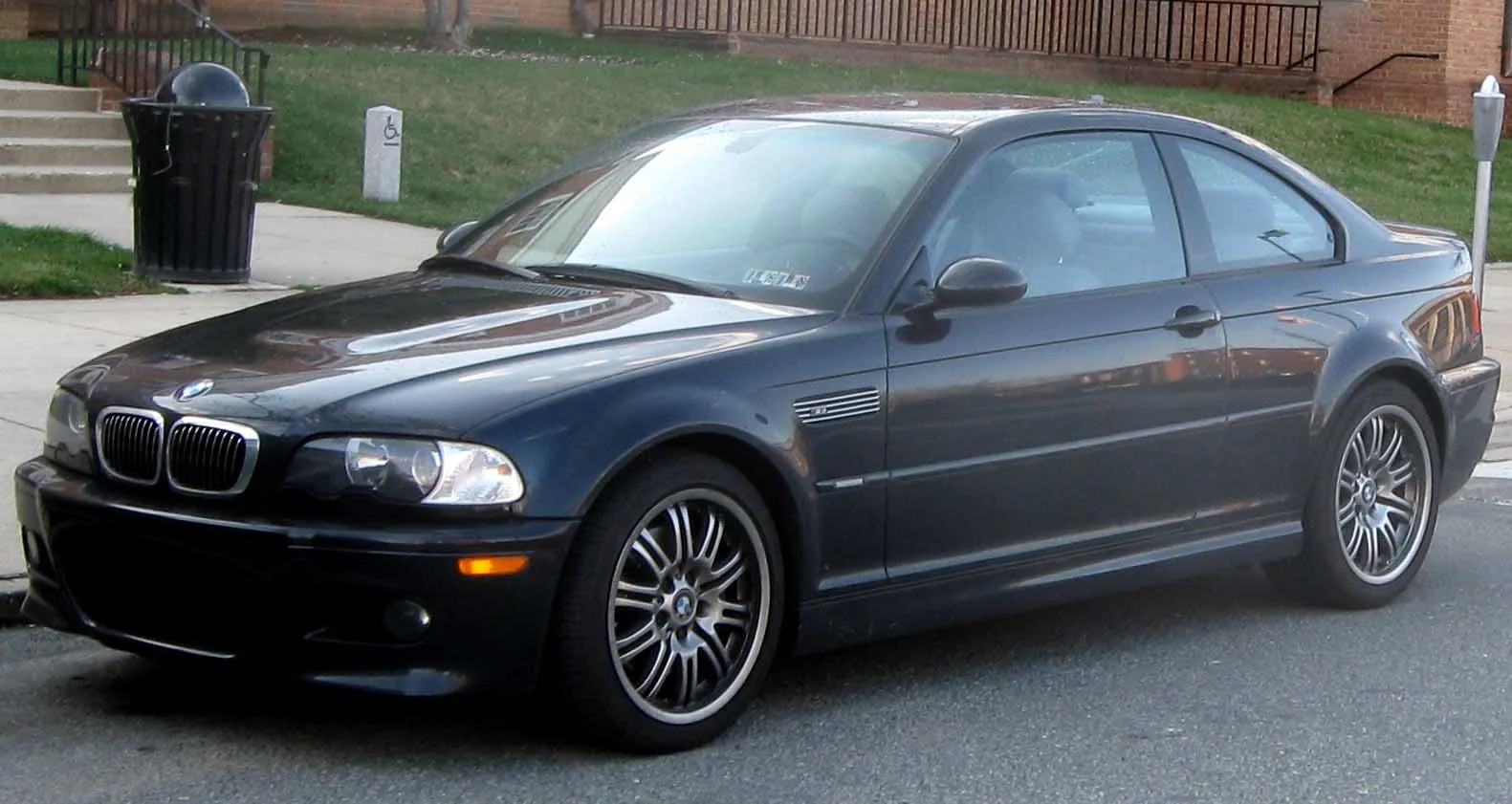
BMW M3 E46 (2000–2006): Reliability, Common Problems and Recalls
UK MOT + US NHTSA · Reviewed · MethodologyUK roadworthiness data and US recall records · Great Britain MOT 2023; US NHTSA full-file snapshot 2026-10-29; UK DfT stock 2025 · Reviewed by Responsable del proyecto (usuario de esta conversación; nombre personal no facilitado) on 2026-10-29 · Sources and methodology
At a glance
- First-presentation pass rate
- 82.6%n = 6,318 initial tests
- Initial tests
- 6,318UK MOT 2023
- Engine
- S54 · 3.2L inline-sixTechnical source in the engine section
- Years
- Global production: 2000–2006Production and US model years can differ
- DVSA anonymised MOT tests and results · Retrieved 2026-10-29T05:26:14Z · Open Government Licence v3.0 · BMW M3; cc=3246-3246; first_use_year=2000-2007; provisional cohort, not VIN verified; ambiguous F10/F90 2017 excluded
The E46 M3 pairs a naturally aspirated S54 six-cylinder engine with a coupe or convertible body. For US readers, its key appeal is that specific mechanical layout, rather than a reliability score. This guide separates documented safety information from unanswered questions about rod bearings, VANOS and rear-body support repairs. We have not inspected or driven the cars described here. This guide has completed initial human editorial review;
Is the E46 M3 reliable?
No data: the sources checked for this guide do not establish the probability that an individual E46 M3 will need a major repair. An inspection result, an owner complaint and a safety recall answer different questions. None is a substitute for evidence about a particular car's condition and past work.
A useful decision starts with the VIN, build information and repair invoices. Ask the inspector to identify unresolved findings rather than simply calling the car reliable. A dated record describing what was inspected, the finding and the corrective work is more useful than an unqualified claim that the major jobs have been done. Our practical conclusion is conditional: compare documented examples on their own evidence, and do not treat an attractive specification as a mechanical clearance.
- NHTSA: Resources Related to Investigations and Recalls · Retrieved 2026-10-28 · NHTSA US government webpage; factual paraphrase. · Complaints do not provide a fleet exposure denominator or a measured failure probability.
Common problems: what is documented and what is still unknown
This is an evidence checklist, not a ranked list of failure frequencies. The sources below have different levels of coverage; a missing estimate is shown explicitly.
Rod bearings (S54)
No data: an original official campaign or service bulletin establishing the relevant bearing service-action scope was not retrieved for this guide. Third-party copies were found but have not been accepted as sufficient verification here. We therefore do not state affected build dates, a preventive replacement mileage or that every S54 needs the same work.
Do all E46 M3s need rod-bearing replacement? The evidence assembled here cannot support that universal claim. Request the car's actual bearing-related invoices and any BMW campaign history, then have a qualified inspector explain what those records establish and what they leave unresolved. An invoice is evidence of recorded work; it is not a promise about the remaining life of an engine.
- NHTSA: Check for Recalls · Retrieved 2026-10-28 · NHTSA US government webpage; factual paraphrase. · Dynamic service; no live VIN query was performed.
VANOS
No data: this guide has no verified official defect document from which to describe a particular S54 VANOS failure mechanism, affected years or frequency. The existence of variable valve timing is a design fact, not proof that a given component is defective. We do not turn enthusiast shorthand into a diagnosis.
For an inspection, ask for a written assessment of any warning lights, stored faults, abnormal running or prior VANOS-related work. The report should say what was observed and how it was checked. A broad statement such as VANOS sorted leaves the scope and date of the work unclear.
- BMW technical training: E46 M Complete Vehicle · Retrieved 2026-10-28 · BMW copyrighted training manual; factual paraphrase only. · Official search extract consulted; direct PDF retrieval failed. No repair or fault claim is drawn from inaccessible pages.
SMG II gearbox: manual versus automated operation
BMW's contemporary US material describes SMG II as an electrohydraulically operated version of the six-speed manual concept. It should not be confused with the later M DCT dual-clutch transmission. That distinction matters when reading service invoices or comparing examples.
Is SMG II as reliable as a manual? No data: no comparable official failure-rate dataset was located. Ask the inspector to assess the actual transmission and explain any diagnostic findings. A manual-versus-SMG preference can be made on control layout; a claim that one particular car is healthy requires vehicle-specific evidence.
- BMW USA: Model Year 2002 M3 Story, SMG technical description · Retrieved 2026-10-28 · BMW copyrighted technical press text; brief factual paraphrase only. · Describes design, not frequency of pump, clutch or control-system failures.
Rear axle support and the subframe question
An official BMW repair-operation listing for E46 M3 type BL93 includes rear axle carrier replacement and foam application around the rear axle support. It supports treating previous structural work as a specific inspection question. The extract does not establish how common damage is or justify saying that every E46 M3 requires reinforcement.
No data: verified symptoms, affected build dates and a complete inspection procedure are not available from that operation list. Ask for a documented assessment of the body support area and the scope of any previous repair. Keep a repair invoice separate from an inspection confirming the present condition.
- BMW E46 USA repair operation: rear axle carrier and rear axle support · Retrieved 2026-10-28 · BMW copyrighted repair document; operation described briefly, no procedure reproduced. · Official search extract consulted; direct retrieval failed. This operation list does not establish symptoms, affected years, crack prevalence or a universal reinforcement requirement.
Driver air-bag safety campaigns
NHTSA's current Takata warning includes certain E46 M3 vehicles. Confirm the car's VIN against current official guidance before driving it; follow any applicable Do Not Drive instruction. A model-year list alone does not establish whether a particular car is affected or repaired.
- NHTSA: Critical Do Not Drive Warning for Certain Vehicles with Takata Air Bags · Retrieved 2026-10-28 · NHTSA US government webpage; short factual paraphrase only. · Certain vehicles only; no reader VIN was checked in this project. Safety notice must be rechecked before release.
- NHTSA acknowledgement: Recall 15V-318, driver frontal air-bag inflator · Retrieved 2026-10-28 · NHTSA federal acknowledgement; US government material, factual paraphrase. · Historical document; current VIN guidance takes priority. Aggregate affected population includes many models.
- NHTSA acknowledgement: Recall 15V-318, driver frontal air-bag inflator · Retrieved 2026-10-28 · NHTSA federal acknowledgement; US government material, factual paraphrase. · Historical document; current VIN guidance takes priority. Aggregate affected population includes many models.
What to check before buying
Use the following questions to commission an inspection and organize records. They are an editorial checklist, not a remote diagnosis or a repair procedure. Ask the seller and inspector to distinguish paperwork supplied, work verified and items that remain inaccessible.
- Match the VIN and build information to the car and its records; confirm current official safety instructions.
- Request itemized records for bearing, VANOS, transmission and rear-body support work; ask what was actually replaced or inspected.
- Have the inspector document warnings, diagnostic findings, leaks and structural observations, with photographs where useful.
- Identify whether the car is a manual, factory SMG II or a conversion; ask what documentation supports that identification.
- Keep unresolved findings visible. An absent record should stay unknown until someone supplies evidence.
- NHTSA: Check for Recalls · Retrieved 2026-10-28 · NHTSA US government webpage; factual paraphrase. · Dynamic service; no live VIN query was performed.
- BMW USA: Model Year 2002 M3 Story, SMG technical description · Retrieved 2026-10-28 · BMW copyrighted technical press text; brief factual paraphrase only. · Describes design, not frequency of pump, clutch or control-system failures.
Model years and changes
Global production dates and US model years should not be used interchangeably. BMW's global history gives the E46 generation a 2000–2006 production period. Its US model-year 2002 kit confirms coupe and convertible offerings and adds SMG as an option for both. This is a verified starting point, not a complete annual change log.
No data: this guide does not contain a fully verified year-by-year US equipment table. For a specific car, use its build information and contemporary US documentation rather than assuming that a feature came with every example from the same calendar year.
| Reference | What the source establishes |
|---|---|
| Global generation | Production period 2000–2006; not a US model-year boundary |
| US model year 2002 | Coupe and convertible; SMG option introduced in this model-year material |
- BMW M: The BMW M3 E46 · Retrieved 2026-10-28 · BMW copyrighted editorial material; factual paraphrase only, no images used. · Global 343–360 hp figures are not US SAE ratings; not used as US specification.
- BMW USA: Press Kit Model Year 2002: M3 · Retrieved 2026-10-28 · BMW copyrighted press material; facts paraphrased, no photographs or paragraphs reproduced. · Exact publication date not captured. Historical specifications are not present-day condition or failure-rate evidence.
Engine: S54
The official US training specification identifies the S54B32 as a 3,246 cc inline-six rated at 333 bhp. This guide uses that US reference instead of inserting the 343 hp figure found in global-market descriptions. Different rating standards and market specifications deserve explicit labels.
The engine code helps keep the evidence focused. A bulletin for another BMW six-cylinder engine is not automatically evidence about the S54. Likewise, a modification or an engine replacement changes the questions an inspector needs to answer; it does not change the specification of the original model.
- BMW technical training: E46 M Complete Vehicle · Retrieved 2026-10-28 · BMW copyrighted training manual; factual paraphrase only. · Official search extract consulted; direct PDF retrieval failed. No repair or fault claim is drawn from inaccessible pages.
- BMW M: The BMW M3 E46 · Retrieved 2026-10-28 · BMW copyrighted editorial material; factual paraphrase only, no images used. · Global 343–360 hp figures are not US SAE ratings; not used as US specification.
NHTSA recalls and VIN checks
Use the linked NHTSA service for the individual vehicle. Older campaigns and non-safety service actions can require additional manufacturer records. The campaign panel on this page is historical context; it does not confirm completion for your car.
| Complaint coverage | Recall coverage | Queried model years | Owner reports | Unique campaigns | Vehicle denominator |
|---|---|---|---|---|---|
| Complete for requested model-year scope | Complete for requested model-year scope | 2001;2002;2003;2004;2005;2006 | 165 | 9 | No data |
No data means the stated scope is unavailable, incomplete or has no vehicle denominator; it never means zero. Report totals and details are shown only for complete requested coverage for the respective dataset. Counts are not vehicle-level failure probabilities.
- NHTSA official datasets and APIs · Retrieved 2026-10-29 · US federal government public data; NHTSA
| Campaign | Queried model years | Report date | Component | Summary |
|---|---|---|---|---|
| 01V245000 | 2001 | 20010731 | PARKING BRAKE:CONVENTIONAL:MECHANICAL:LINKAGE AND CABLE | VEHICLE DESCRIPTION: PASSENGER VEHICLES. THE TWO SCREWS THAT SECURE THE PARKING BRAKE CABLE MOUNTING BRACKET TO THE BACKING PLATE WERE NOT TIGHTENED PROPERLY. AS A RESULT, THE SCREWS COULD LOOSEN AND EVENTUALLY FALL INTO THE PARKING BRAKE DRUM. |
| 03V160000 | 2003 | 20030429 | VISIBILITY:POWER WINDOW DEVICES AND CONTROLS | ON CERTAIN PASSENGER VEHICLES, THE WINDOW LIFTING ANTI-PINCHING DEVICE MIGHT NOT FUNCTION PROPERLY. |
| 13V172000 | 2002;2003 | 20130502 | AIR BAGS | BMW is recalling certain model year 2002-2003 325i, 325xi, 330i, 330xi sedans; 325Ci and 330Ci coupes and convertibles; 325iT and 325xiT Sports Wagons; and M3 coupes and convertibles to address a safety defect in the passenger side frontal air bag which may produce excessive internal pressure causing the inflator to rupture upon deployment of the air bag. |
| 14V428000 | 2001;2002;2003;2004;2005;2006 | 20180611 | AIR BAGS | BMW of North America, LLC (BMW) is recalling certain model year 2000 323i sedans, coupes, convertibles, and Sports Wagons; 2000 328i sedans and coupes; 2001-2005 325i sedans, coupes, convertibles, and Sport Wagons; 2001-2005 325xi sedans and Sports Wagons; 2006 325i coupes and convertibles; 2001-2006 330i sedans, coupes, and convertibles; 2001-2005 330xi sedans; and 2001-2006 M3 coupes and convertibles to address a safety defect in the passenger side frontal air bag which may produce excessive internal pressure that could cause the air bag inflator to rupture upon deployment of the air bag. |
| 15V318000 | 2002;2003;2004;2005;2006 | 20150528 | AIR BAGS:FRONTAL:DRIVER SIDE:INFLATOR MODULE | BMW of North America, LLC (BMW) is recalling certain model year 2002-2005 325i, 325xi, 330i, and 330xi Sedans, and 325xi and 325i Sportswagons, 2002-2006 330Ci, 325Ci, and M3 Convertibles and 325i, 330i, and M3 Coupes, 2002-2003 M5, 540i, 525i Sedan, and 530i Sedans, and 540i and 525i Sportswagons, and 2003 X5 3.0i and 4.4i Sports Activity Vehicles. Please note that the 5-series and X5 vehicles are only included if they are equipped with the optional sports steering wheel. The affected vehicles are equipped with a dual-stage driver frontal air bag that may be susceptible to moisture intrusion which, over time, could cause the inflator to rupture. |
| 17V047000 | 2001;2002 | 20170120 | AIR BAGS:FRONTAL:DRIVER SIDE:INFLATOR MODULE | BMW of North America, LLC (BMW) is recalling certain 2000-2002 BMW 320i, 323i, 325i, 325xi, 330i, 330xi, 323Ci, 325Ci, 330Ci, M3, 323iT, 325iT and 325xiT vehicles, 2001-2002 525i, 530i, 540i, M5, 525iT and 540iT vehicles, and 2001-2003 X5 3.0i, X5 4.4i, and X5 4.6is vehicles. These vehicles may have had a driver-side air bag module installed as replacement equipment such as after a vehicle crash necessitating replacement of the original air bag, or as a remedy part for a prior recall. These replacement modules contain an air bag inflator that may rupture due to propellant degradation occurring after long-term exposure to lower absolute humidity, temperature and temperature cycling. |
| 17V676000 | 2006 | 20171025 | ELECTRICAL SYSTEM:WIRING | BMW of North America, LLC (BMW) is recalling certain 2006-2011 323i, 325i, 325xi, 328i, 328xi, 330i, 330xi, 335i, 335xi and M3, 2007-2011 328i xDrive, 335i xDrive and 335is and 2009-2011 335d vehicles. The wiring and electrical connectors for the system that controls air flow for the heating and air conditioning system may overheat. |
| 20V017000 | 2006 | 20200115 | AIR BAGS:FRONTAL:DRIVER SIDE:INFLATOR MODULE | BMW of North America, LLC (BMW) is recalling certain 2008-2013 128i and 135i Convertibles, 128i, 135i, and M Coupes, 2007-2010 X3 30si and X3 xDrive30i, 2013-2015 X1 sDrive28i, X1 xDrive28i and X1 xDrive35i, 2007-2013 328i, 328i xDrive, 335i, 335is, 335i xDrive and M3 Coupes, 2006-2011 328i, 328xi, 328i xDrive, 325i, 325xi, 330i, 330xi, 335i, 335xi, 335i xDrive and M3, 2009-2011 335D, 2006-2012 325xi, 328i, 328xi and 328i xDrive, 2010-2011 X6 ActiveHybrid, 2007-2013 328i, 335i, 335is, M3 Coupes, X5 30si, X5 xDrive30i, X5 xDrive35i, X5 48i, X5 xDrive48i, X5 xDrive50i and X5 M, 2009-2013 X5 xDrive35d and 2008-2014 X6 xDrive35i, X6 xDrive50i and X6M vehicles equipped with non-desiccated driver frontal air bag inflators containing phase stabilized ammonium nitrate (PSAN) that were used as interim remedy parts for previous Takata recalls. These inflators may explode due to propellant degradation occurring after long-term exposure to high absolute humidity, high temperatures, and high temperature cycling. |
| 20V018000 | 2001;2002;2003;2004;2005;2006 | 20200115 | AIR BAGS:FRONTAL:PASSENGER SIDE:INFLATOR MODULE | BMW of North America, LLC (BMW) is recalling certain 2000-2005 323iT, 325iT, 325xiT, 320i, 323i, 325i, 325xi, 328i, 330i and 330xi and 2000-2006 323Ci, 325Ci, 328Ci, 330Ci, M3 Coupe, 323Cic, 325Cic, 330Cic, and M3 Convertible vehicles equipped with non-desiccated frontal Takata PSAN inflators and PSPI passenger frontal air bag inflators containing phase stabilized ammonium nitrate (PSAN) propellant that were used as interim remedy parts for previous Takata recalls. These inflators may explode due to propellant degradation occurring after long-term exposure to high absolute humidity, high temperatures, and high temperature cycling. |
Campaign records may overlap model years and other BMW models. A listed campaign does not establish whether a particular VIN remains unrepaired.
- NHTSA recalls; check an individual vehicle by VIN · Retrieved 2026-10-29 · US federal government public data; NHTSA
| Component | Reports mentioning component | Reports in query | Queried model years |
|---|---|---|---|
| AIR BAGS | 42 | 165 | 2001;2002;2003;2004;2005;2006 |
| POWER TRAIN | 16 | 165 | 2001;2002;2003;2004;2005;2006 |
| ENGINE AND ENGINE COOLING:ENGINE | 10 | 165 | 2001;2002;2003;2004;2005;2006 |
| POWER TRAIN:MANUAL TRANSMISSION | 10 | 165 | 2001;2002;2003;2004;2005;2006 |
| SUSPENSION | 10 | 165 | 2001;2002;2003;2004;2005;2006 |
| ELECTRICAL SYSTEM | 8 | 165 | 2001;2002;2003;2004;2005;2006 |
| STRUCTURE:BODY | 8 | 165 | 2001;2002;2003;2004;2005;2006 |
| VISIBILITY | 8 | 165 | 2001;2002;2003;2004;2005;2006 |
| ENGINE AND ENGINE COOLING:ENGINE:GASOLINE | 7 | 165 | 2001;2002;2003;2004;2005;2006 |
| POWER TRAIN:AUTOMATIC TRANSMISSION | 7 | 165 | 2001;2002;2003;2004;2005;2006 |
| ENGINE | 6 | 165 | 2001;2002;2003;2004;2005;2006 |
| EXTERIOR LIGHTING | 6 | 165 | 2001;2002;2003;2004;2005;2006 |
| TIRES | 6 | 165 | 2001;2002;2003;2004;2005;2006 |
| ENGINE AND ENGINE COOLING | 5 | 165 | 2001;2002;2003;2004;2005;2006 |
| STRUCTURE:FRAME AND MEMBERS:UNDERBODY SHIELDS | 5 | 165 | 2001;2002;2003;2004;2005;2006 |
| UNKNOWN OR OTHER | 5 | 165 | 2001;2002;2003;2004;2005;2006 |
| VISIBILITY:REARVIEW MIRRORS/DEVICES | 4 | 165 | 2001;2002;2003;2004;2005;2006 |
| SUSPENSION:REAR | 3 | 165 | 2001;2002;2003;2004;2005;2006 |
| VEHICLE SPEED CONTROL | 3 | 165 | 2001;2002;2003;2004;2005;2006 |
| AIR BAGS:SIDE/WINDOW | 2 | 165 | 2001;2002;2003;2004;2005;2006 |
| POWER TRAIN:CLUTCH ASSEMBLY | 2 | 165 | 2001;2002;2003;2004;2005;2006 |
| POWER TRAIN:DRIVELINE:DRIVESHAFT | 2 | 165 | 2001;2002;2003;2004;2005;2006 |
| STRUCTURE | 2 | 165 | 2001;2002;2003;2004;2005;2006 |
| WHEELS | 2 | 165 | 2001;2002;2003;2004;2005;2006 |
| AIR BAGS:FRONTAL | 1 | 165 | 2001;2002;2003;2004;2005;2006 |
| ELECTRICAL SYSTEM:WIRING: REAR COMPARTMENT/TRUNK | 1 | 165 | 2001;2002;2003;2004;2005;2006 |
| EQUIPMENT:APPLIANCE:AIR CONDITIONER | 1 | 165 | 2001;2002;2003;2004;2005;2006 |
| FUEL SYSTEM, GASOLINE:FUEL INJECTION SYSTEM:INJECTORS | 1 | 165 | 2001;2002;2003;2004;2005;2006 |
| FUEL SYSTEM, OTHER:STORAGE:FUEL GAUGE SYSTEM | 1 | 165 | 2001;2002;2003;2004;2005;2006 |
| FUEL/PROPULSION SYSTEM | 1 | 165 | 2001;2002;2003;2004;2005;2006 |
| LATCHES/LOCKS/LINKAGES | 1 | 165 | 2001;2002;2003;2004;2005;2006 |
| LATCHES/LOCKS/LINKAGES:DOORS:LATCH | 1 | 165 | 2001;2002;2003;2004;2005;2006 |
| LATCHES/LOCKS/LINKAGES:TRUNK LID:LOCK | 1 | 165 | 2001;2002;2003;2004;2005;2006 |
| PARKING BRAKE:CONVENTIONAL:MECHANICAL:LINKAGE AND CABLE | 1 | 165 | 2001;2002;2003;2004;2005;2006 |
| SEAT BELTS | 1 | 165 | 2001;2002;2003;2004;2005;2006 |
| SERVICE BRAKES, HYDRAULIC | 1 | 165 | 2001;2002;2003;2004;2005;2006 |
| STEERING:COLUMN LOCKING:ANTI-THEFT DEVICE | 1 | 165 | 2001;2002;2003;2004;2005;2006 |
| STRUCTURE:BODY:BUMPERS | 1 | 165 | 2001;2002;2003;2004;2005;2006 |
| STRUCTURE:BODY:HOOD | 1 | 165 | 2001;2002;2003;2004;2005;2006 |
| STRUCTURE:FRAME AND MEMBERS | 1 | 165 | 2001;2002;2003;2004;2005;2006 |
| TIRES:PRESSURE MONITORING AND REGULATING SYSTEMS | 1 | 165 | 2001;2002;2003;2004;2005;2006 |
| VISIBILITY/WIPER | 1 | 165 | 2001;2002;2003;2004;2005;2006 |
| VISIBILITY:REARVIEW MIRRORS/DEVICES:EXTERIOR | 1 | 165 | 2001;2002;2003;2004;2005;2006 |
| VISIBILITY:REARVIEW MIRRORS/DEVICES:INTERIOR | 1 | 165 | 2001;2002;2003;2004;2005;2006 |
| VISIBILITY:WINDSHIELD | 1 | 165 | 2001;2002;2003;2004;2005;2006 |
| WHEELS:RIM | 1 | 165 | 2001;2002;2003;2004;2005;2006 |
Owner reports are allegations and may mention several components. No fleet denominator is available: these counts are not failure rates or proof of a defect.
- NHTSA complaints dataset · Retrieved 2026-10-29 · US federal government public data; NHTSA
- NHTSA: Check for Recalls · Retrieved 2026-10-28 · NHTSA US government webpage; factual paraphrase. · Dynamic service; no live VIN query was performed.
- Check a vehicle with NHTSA
How to read the Great Britain MOT panel
The MOT panel describes a British inspection sample, not US ownership outcomes. Read its exact test period, sample and result definition before comparing it with another generation. A recorded pass does not answer the unresolved bearing or VANOS questions above. Odometer units are not assumed when the source field is unverified.
| Test year | Initial tests | P: first pass | F: failed | PRS: rectified | First-presentation pass (%) | Final pass (%) |
|---|---|---|---|---|---|---|
| 2023 | 6,318 | 5219 | 889 | 210 | 82.6% | 85.9 |
P passed at first presentation; F failed; PRS failed initially and passed after rectification. First-presentation pass rate = P / (P + F + PRS); final pass rate = (P + PRS) / (P + F + PRS). UK roadworthiness tests cover safety and emissions; they do not measure engine life, gearbox health, service history or US failure probability. Contains public sector information licensed under the Open Government Licence v3.0.
- DVSA anonymised MOT tests and results · Retrieved 2026-10-29T05:26:14Z · Open Government Licence v3.0 · BMW M3; cc=3246-3246; first_use_year=2000-2007; provisional cohort, not VIN verified; ambiguous F10/F90 2017 excluded
- Open Government Licence v3.0
| Record kind | MOT area code | Annotations | Distinct tests | Tests per 100 initial tests |
|---|---|---|---|---|
| advisory | Body, chassis, structure | 208 | 178 | 2.8 |
| advisory | Brakes | 2475 | 1346 | 21.3 |
| advisory | Identification of the vehicle | 76 | 69 | 1.1 |
| advisory | Lamps, reflectors and electrical equipment | 185 | 117 | 1.9 |
| advisory | Noise, emissions and leaks | 508 | 452 | 7.2 |
| advisory | Non-component advisories | 255 | 227 | 3.6 |
| advisory | Road Wheels | 17 | 12 | 0.2 |
| advisory | Seat belts and supplementary restraint systems | 26 | 21 | 0.3 |
| advisory | Steering | 48 | 46 | 0.7 |
| advisory | Suspension | 775 | 518 | 8.2 |
| advisory | Tyres | 1560 | 890 | 14.1 |
| advisory | Visibility | 3 | 3 | 0.0 |
| defect | Body, chassis, structure | 79 | 71 | 1.1 |
| defect | Brakes | 540 | 324 | 5.1 |
| defect | Identification of the vehicle | 43 | 28 | 0.4 |
| defect | Lamps, reflectors and electrical equipment | 454 | 278 | 4.4 |
| defect | Noise, emissions and leaks | 218 | 146 | 2.3 |
| defect | Road Wheels | 37 | 21 | 0.3 |
| defect | Seat belts and supplementary restraint systems | 79 | 76 | 1.2 |
| defect | Steering | 16 | 15 | 0.2 |
| defect | Suspension | 373 | 278 | 4.4 |
| defect | Tyres | 255 | 181 | 2.9 |
| defect | Visibility | 159 | 128 | 2.0 |
| minor | Body, chassis, structure | 37 | 35 | 0.6 |
| minor | Brakes | 42 | 31 | 0.5 |
| minor | Lamps, reflectors and electrical equipment | 274 | 239 | 3.8 |
| minor | Steering | 16 | 12 | 0.2 |
| minor | Suspension | 145 | 130 | 2.1 |
| minor | Tyres | 4 | 2 | 0.0 |
| minor | Visibility | 220 | 206 | 3.3 |
| rectified_defect | Body, chassis, structure | 6 | 6 | 0.1 |
| rectified_defect | Brakes | 7 | 7 | 0.1 |
| rectified_defect | Identification of the vehicle | 12 | 10 | 0.2 |
| rectified_defect | Lamps, reflectors and electrical equipment | 206 | 144 | 2.3 |
| rectified_defect | Noise, emissions and leaks | 17 | 17 | 0.3 |
| rectified_defect | Road Wheels | 4 | 3 | 0.0 |
| rectified_defect | Seat belts and supplementary restraint systems | 23 | 23 | 0.4 |
| rectified_defect | Suspension | 3 | 3 | 0.0 |
| rectified_defect | Tyres | 5 | 5 | 0.1 |
| rectified_defect | Visibility | 60 | 51 | 0.8 |
Area codes follow the DVSA source. The percentage counts distinct tests within each area; one test can appear in several areas. Do not add percentages across areas. Defect, rectified-defect, minor and advisory records are separate.
- DVSA anonymised MOT tests and results · Retrieved 2026-10-29T05:26:14Z · Open Government Licence v3.0 · BMW M3; cc=3246-3246; first_use_year=2000-2007; provisional cohort, not VIN verified; ambiguous F10/F90 2017 excluded
| Item | Inspection area | Distinct initial tests | Tests per 100 initial tests | Source record code |
|---|---|---|---|---|
| A spring or spring component fractured or seriously weakened | Suspension | 85 | 1.3 | F |
| Brake pipe damaged or excessively corroded | Brakes | 83 | 1.3 | F |
| An SRS malfunction indicator lamp (MIL) indicates a system malfunction | Seat belts and supplementary restraint systems | 69 | 1.1 | F |
| Headlamp levelling device inoperative | Lamps, reflectors and electrical equipment | 67 | 1.1 | F |
| Tyre tread depth not in accordance with the requirements | Tyres | 66 | 1.0 | F |
| A suspension joint dust cover missing or no longer prevents the ingress of dirt etc | Suspension | 56 | 0.9 | F |
| A tyre cords visible or damaged | Tyres | 56 | 0.9 | F |
| Lambda coefficient outside the default limits or the range specified by the manufacturer | Noise, emissions and leaks | 55 | 0.9 | F |
| Engine MIL illuminated indicating a malfunction | Noise, emissions and leaks | 54 | 0.9 | F |
| The aim of a headlamp is not within limits laid down in the requirements | Lamps, reflectors and electrical equipment | 51 | 0.8 | F |
| A suspension pin, bush or joint excessively worn | Suspension | 51 | 0.8 | F |
| Windscreen washers not working or not providing sufficient fluid to clear the windscreen | Visibility | 49 | 0.8 | F |
| Parking brake efficiency below minimum requirement | Brakes | 45 | 0.7 | F |
| Wiper blade missing or obviously not clearing the windscreen | Visibility | 42 | 0.7 | F |
| Significant brake effort recorded with no brake applied indicating a binding brake | Brakes | 41 | 0.6 | F |
| ESC MIL indicates a system malfunction | Brakes | 38 | 0.6 | F |
| Warning device shows system malfunction | Brakes | 38 | 0.6 | F |
| A lamp missing, inoperative or in the case of a multiple light source more than 1/2 not functioning | Lamps, reflectors and electrical equipment | 35 | 0.6 | F |
| Windscreen washers not working or not providing sufficient fluid to clear the windscreen | Visibility | 34 | 0.5 | F |
| Fuel system leaking, or missing or ineffective filler cap | Body, chassis, structure | 29 | 0.5 | F |
| A rear registration plate lamp or light source missing or inoperative in the case of a single lamp or all lamps | Lamps, reflectors and electrical equipment | 25 | 0.4 | F |
| A tyre seriously damaged | Tyres | 25 | 0.4 | F |
| A headlamp or light source missing, inoperative or more than ½ not functioning in the case of LED | Lamps, reflectors and electrical equipment | 24 | 0.4 | F |
| Lamp emitted colour, position or intensity not in accordance with the requirements | Lamps, reflectors and electrical equipment | 24 | 0.4 | F |
| Parking brake inoperative on one side | Brakes | 22 | 0.3 | F |
Ranked by distinct initial tests mentioning each item, within this record kind only. Do not add item percentages or record kinds: a test can mention several items. F/P source records remain separate. Catalogue deficiency categories are not observed severity and are not displayed. Advisory and minor records are not counted as failed tests.
- DVSA anonymised MOT tests and results · Retrieved 2026-10-29T05:26:14Z · Open Government Licence v3.0 · BMW M3; cc=3246-3246; first_use_year=2000-2007; provisional cohort, not VIN verified; ambiguous F10/F90 2017 excluded
- Open Government Licence v3.0
| Item | Inspection area | Distinct initial tests | Tests per 100 initial tests | Source record code |
|---|---|---|---|---|
| The aim of a headlamp is not within limits laid down in the requirements | Lamps, reflectors and electrical equipment | 48 | 0.8 | P |
| The aim of a headlamp is not within limits laid down in the requirements | Lamps, reflectors and electrical equipment | 40 | 0.6 | P |
| Windscreen washers not working or not providing sufficient fluid to clear the windscreen | Visibility | 22 | 0.3 | P |
| Wiper blade missing or obviously not clearing the windscreen | Visibility | 22 | 0.3 | P |
| An SRS malfunction indicator lamp (MIL) indicates a system malfunction | Seat belts and supplementary restraint systems | 19 | 0.3 | P |
| Engine MIL illuminated indicating a malfunction | Noise, emissions and leaks | 16 | 0.3 | P |
| A rear registration plate lamp or light source missing or inoperative in the case of a single lamp or all lamps | Lamps, reflectors and electrical equipment | 13 | 0.2 | P |
| A lamp missing, inoperative or in the case of a multiple light source more than 1/2 not functioning | Lamps, reflectors and electrical equipment | 12 | 0.2 | P |
| Stop lamp missing, inoperative or in the case of a multiple light source more than 1/2 not functioning | Lamps, reflectors and electrical equipment | 8 | 0.1 | P |
| Number plate does not conform to the specified requirements | Identification of the vehicle | 7 | 0.1 | P |
| A headlamp or light source missing, inoperative or more than ½ not functioning in the case of LED | Lamps, reflectors and electrical equipment | 6 | 0.1 | P |
| A direction indicator lamp missing, inoperative or in the case of a multiple light source more than 1/2 not functioning | Lamps, reflectors and electrical equipment | 5 | 0.1 | P |
| Headlamp levelling device inoperative | Lamps, reflectors and electrical equipment | 4 | 0.1 | P |
| Rear registration plate lamp does not illuminate simultaneously with the position lamps | Lamps, reflectors and electrical equipment | 4 | 0.1 | P |
| ESC MIL indicates a system malfunction | Brakes | 3 | 0.0 | P |
| Warning device shows system malfunction | Brakes | 3 | 0.0 | P |
| The aim of a headlamp is not within limits laid down in the requirements | Lamps, reflectors and electrical equipment | 3 | 0.0 | P |
| The aim of a headlamp is not within limits laid down in the requirements | Lamps, reflectors and electrical equipment | 3 | 0.0 | P |
| Windscreen washers not working or not providing sufficient fluid to clear the windscreen | Visibility | 3 | 0.0 | P |
| Exhaust system leaking or insecure | Body, chassis, structure | 2 | 0.0 | P |
| Fuel system leaking, or missing or ineffective filler cap | Body, chassis, structure | 2 | 0.0 | P |
| Number plate missing or so insecure that it is likely to fall off | Identification of the vehicle | 2 | 0.0 | P |
| An obligatory rear fog lamp missing, or a front or rear fog lamp inoperative or in the case of a multiple light source more than 1/2 not functioning | Lamps, reflectors and electrical equipment | 2 | 0.0 | P |
| Lamp emitted colour, position or intensity not in accordance with the requirements | Lamps, reflectors and electrical equipment | 2 | 0.0 | P |
| Lamp emitted colour, position or intensity not in accordance with the requirements | Lamps, reflectors and electrical equipment | 2 | 0.0 | P |
Ranked by distinct initial tests mentioning each item, within this record kind only. Do not add item percentages or record kinds: a test can mention several items. F/P source records remain separate. Catalogue deficiency categories are not observed severity and are not displayed. Advisory and minor records are not counted as failed tests.
- DVSA anonymised MOT tests and results · Retrieved 2026-10-29T05:26:14Z · Open Government Licence v3.0 · BMW M3; cc=3246-3246; first_use_year=2000-2007; provisional cohort, not VIN verified; ambiguous F10/F90 2017 excluded
- Open Government Licence v3.0
| Item | Inspection area | Distinct initial tests | Tests per 100 initial tests | Source record code |
|---|---|---|---|---|
| corroded, covered in grease or other material | Brakes | 843 | 13.3 | A |
| worn close to legal limit/worn on edge | Tyres | 549 | 8.7 | A |
| worn, pitted or scored, but not seriously weakened | Brakes | 319 | 5.0 | A |
| leak, but not excessive | Noise, emissions and leaks | 256 | 4.1 | A |
| slightly damaged/cracking or perishing | Tyres | 256 | 4.1 | A |
| leak, but not excessive | Noise, emissions and leaks | 214 | 3.4 | A |
| Play in steering rack inner joint(s) | Non-component advisories | 143 | 2.3 | A |
| slightly deteriorated | Brakes | 140 | 2.2 | A |
| wearing thin | Brakes | 124 | 2.0 | A |
| ball joint has slight play | Suspension | 102 | 1.6 | A |
| worn close to legal limit/worn on edge | Tyres | 92 | 1.5 | A |
| has a minor leak of exhaust gases | Body, chassis, structure | 80 | 1.3 | A |
| corroded but not seriously weakened | Suspension | 78 | 1.2 | A |
| has slight corrosion to ferrule | Brakes | 77 | 1.2 | A |
| pin or bush worn but not resulting in excessive movement | Suspension | 76 | 1.2 | A |
| corroded | Suspension | 71 | 1.1 | A |
| binding but not excessively | Brakes | 67 | 1.1 | A |
| deteriorated but not likely to be misread | Identification of the vehicle | 67 | 1.1 | A |
| worn, but not excessively | Brakes | 65 | 1.0 | A |
| slightly discoloured | Lamps, reflectors and electrical equipment | 64 | 1.0 | A |
| has a cut but not deep enough to reach the ply or cords | Tyres | 59 | 0.9 | A |
| has light misting of oil | Suspension | 49 | 0.8 | A |
| slightly discoloured | Lamps, reflectors and electrical equipment | 46 | 0.7 | A |
| fluctuating, but not excessively | Brakes | 45 | 0.7 | A |
| Nail in tyre | Non-component advisories | 44 | 0.7 | A |
Ranked by distinct initial tests mentioning each item, within this record kind only. Do not add item percentages or record kinds: a test can mention several items. F/P source records remain separate. Catalogue deficiency categories are not observed severity and are not displayed. Advisory and minor records are not counted as failed tests.
- DVSA anonymised MOT tests and results · Retrieved 2026-10-29T05:26:14Z · Open Government Licence v3.0 · BMW M3; cc=3246-3246; first_use_year=2000-2007; provisional cohort, not VIN verified; ambiguous F10/F90 2017 excluded
- Open Government Licence v3.0
| Item | Inspection area | Distinct initial tests | Tests per 100 initial tests | Source record code |
|---|---|---|---|---|
| A rear registration plate lamp or light source missing or inoperative in the case of multiple lamps or light sources | Lamps, reflectors and electrical equipment | 163 | 2.6 | M |
| Windscreen or window damaged or seriously discoloured but not adversely affecting driver's view | Visibility | 145 | 2.3 | M |
| A suspension joint dust cover severely deteriorated | Suspension | 71 | 1.1 | M |
| A suspension joint dust cover severely deteriorated | Suspension | 32 | 0.5 | M |
| Wiper blade defective | Visibility | 32 | 0.5 | M |
| A transmission shaft constant velocity joint boot severely deteriorated | Body, chassis, structure | 31 | 0.5 | M |
| Obligatory mirror or device slightly damaged or loose | Visibility | 27 | 0.4 | M |
| A lamp with a multiple light source up to 1/2 not functioning | Lamps, reflectors and electrical equipment | 26 | 0.4 | M |
| A suspension joint dust cover severely deteriorated | Suspension | 26 | 0.4 | M |
| Headlamp reflector or lens slightly defective | Lamps, reflectors and electrical equipment | 15 | 0.2 | M |
| Flexible brake hose slightly damaged, chafed or twisted | Brakes | 9 | 0.1 | M |
| Stop lamp with a multiple light source up to 1/2 not functioning | Lamps, reflectors and electrical equipment | 9 | 0.1 | M |
| Flexible brake hose slightly damaged, chafed or twisted | Brakes | 7 | 0.1 | M |
| Steering rack gaiter or ball joint dust cover damaged or deteriorated | Steering | 7 | 0.1 | M |
| Brake pipe inadequately clipped or supported | Brakes | 6 | 0.1 | M |
| Flexible brake hose slightly damaged, chafed or twisted | Brakes | 6 | 0.1 | M |
| A direction indicator lamp with a multiple light source up to 1/2 not functioning | Lamps, reflectors and electrical equipment | 6 | 0.1 | M |
| A lens defective which has no effect on emitted light | Lamps, reflectors and electrical equipment | 5 | 0.1 | M |
| Steering rack gaiter or ball joint dust cover damaged or deteriorated | Steering | 5 | 0.1 | M |
| A battery insecure but not likely to fall from carrier | Lamps, reflectors and electrical equipment | 4 | 0.1 | M |
| A rear registration plate lamp or light source missing or inoperative in the case of multiple lamps or light sources | Lamps, reflectors and electrical equipment | 4 | 0.1 | M |
| Indicator or hazard warning switch does not operate in accordance with the requirements | Lamps, reflectors and electrical equipment | 4 | 0.1 | M |
| Obligatory mirror or device slightly damaged or loose | Visibility | 4 | 0.1 | M |
| A lamp not securely attached | Lamps, reflectors and electrical equipment | 3 | 0.0 | M |
| Headlamp reflector or lens slightly defective | Lamps, reflectors and electrical equipment | 3 | 0.0 | M |
Ranked by distinct initial tests mentioning each item, within this record kind only. Do not add item percentages or record kinds: a test can mention several items. F/P source records remain separate. Catalogue deficiency categories are not observed severity and are not displayed. Advisory and minor records are not counted as failed tests.
- DVSA anonymised MOT tests and results · Retrieved 2026-10-29T05:26:14Z · Open Government Licence v3.0 · BMW M3; cc=3246-3246; first_use_year=2000-2007; provisional cohort, not VIN verified; ambiguous F10/F90 2017 excluded
- Open Government Licence v3.0
- GOV.UK / DVSA: Getting an MOT · Retrieved 2026-10-28 · Open Government Licence v3.0 except where stated; attribution to GOV.UK / DVSA. · Not a US inspection survey or a forecast of engine/transmission durability.
Production and surviving vehicles
No data: this editorial guide does not publish an accepted E46 total-production figure. Conflicting scope, body style and market definitions must be reconciled before a total is used. Any British registration series shown separately measures that series, not worldwide survivors or US supply.
| Period | Manufacture cohort | Licensed | SORN | Coverage | Coverage reason | Source limitations |
|---|---|---|---|---|---|---|
| 2025 | 2001-2005 | 3903 | 4895 | Approximate partial manufacture cohort; UK stock only | Interior manufacture cohort only; not a full generation total. | United Kingdom end-of-year stock in DfT VEH0124, not worldwide or US survivors. Approximate partial cohort by recorded model label and YearManufacture; not VIN-verified. Boundary years and unknown manufacture years excluded. Imports, exports, scrappage and registration/coding changes affect stock; no production denominator or survival percentage. Non-numeric source cells stay unknown; absent rows are not zero. |
UK registrations are not worldwide production totals. A manufacture cohort covers only the listed manufacture years; partial cohorts must not be read as a whole-generation total. A generation total is shown only when the supplied mapping supports it.
- DfT vehicle licensing statistics · United Kingdom end-of-year stock in DfT VEH0124, not worldwide or US survivors. Approximate partial cohort by recorded model label and YearManufacture; not VIN-verified. Boundary years and unknown manufacture years excluded. Imports, exports, scrappage and registration/coding changes affect stock; no production denominator or survival percentage. Non-numeric source cells stay unknown; absent rows are not zero.
Body styles, CSL and related generations
The US coupe and convertible belong in the same generation guide, with equipment and condition assessed individually. The CSL is kept as a variant topic here, rather than given a separate reliability verdict. No data: a verified US specification and eligibility account for that variant is not part of this release.
- BMW USA: Press Kit Model Year 2002: M3 · Retrieved 2026-10-28 · BMW copyrighted press material; facts paraphrased, no photographs or paragraphs reproduced. · Exact publication date not captured. Historical specifications are not present-day condition or failure-rate evidence.
- BMW M: The BMW M3 E46 · Retrieved 2026-10-28 · BMW copyrighted editorial material; factual paraphrase only, no images used. · Global 343–360 hp figures are not US SAE ratings; not used as US specification.
- BMW technical training: E46 M Complete Vehicle · Retrieved 2026-10-28 · BMW copyrighted training manual; factual paraphrase only. · Official search extract consulted; direct PDF retrieval failed. No repair or fault claim is drawn from inaccessible pages.
- BMW USA: Press Kit Model Year 2002: M3 · Retrieved 2026-10-28 · BMW copyrighted press material; facts paraphrased, no photographs or paragraphs reproduced. · Exact publication date not captured. Historical specifications are not present-day condition or failure-rate evidence.
- NHTSA: Critical Do Not Drive Warning for Certain Vehicles with Takata Air Bags · Retrieved 2026-10-28 · NHTSA US government webpage; short factual paraphrase only. · Certain vehicles only; no reader VIN was checked in this project. Safety notice must be rechecked before release.
Continue exploring
BMW E92 M3 and the shared E90/E92/E93 generation
US-focused E92 M3 guide covering the shared E90/E92/E93 generation: V8 specifications, body styles, DCT recall context, inspection questions and data limits.
BMW F80 M3
A US F80 M3 guide to S55 specifications, Competition Package differences, narrow safety campaigns, crank-hub evidence gaps and inspection questions.
Read the evidence in context
The MOT is a UK roadworthiness inspection. Its pass rate is not an engine-reliability score and does not predict a US owner's repair costs. Recall applicability must be checked by VIN. Read the methodology and limitations.